When do the 2025/2026 e-invoicing obligations apply in Germany?
Since 2025, domestic companies must be able to receive e-invoices for B2B transactions. From 2027, companies with prior-year turnover above 800,000 euros must issue e-invoices; companies at or below 800,000 euros can use transition rules until the end of 2027. From 2028, issuing e-invoices is mandatory for all domestic B2B companies.
Can XRechnung be implemented in SAP ECC and S/4HANA?
Yes. XRechnung can be integrated in both SAP ECC and SAP S/4HANA so core invoicing processes stay inside your ERP system.
Do I need additional middleware for XRechnung in SAP?
Not necessarily. Depending on your architecture, XRechnung can be implemented directly in SAP without introducing a separate third-party core platform.
What is the difference between XRechnung and ZUGFeRD in SAP?
XRechnung is a pure XML format, while ZUGFeRD combines a visual document with structured data. Both can be relevant in SAP environments depending on your target process.
How can incoming XRechnung invoices (inbound) be processed in SAP?
Inbound processing can be automated in SAP by validating incoming structured invoice data, matching it to business objects, and routing it for posting.
 SAP Certification
 SAP-only focus
 Regulatory-ready
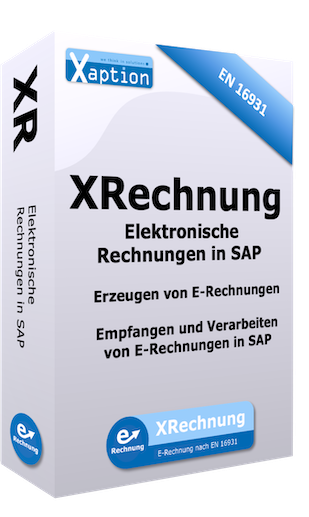
 Directly in SAP
 XRechnung without separate middleware